
The
Foundation
Layer
A philanthropic strategy for the AGI transition
by TYLER JOHN
About the Author
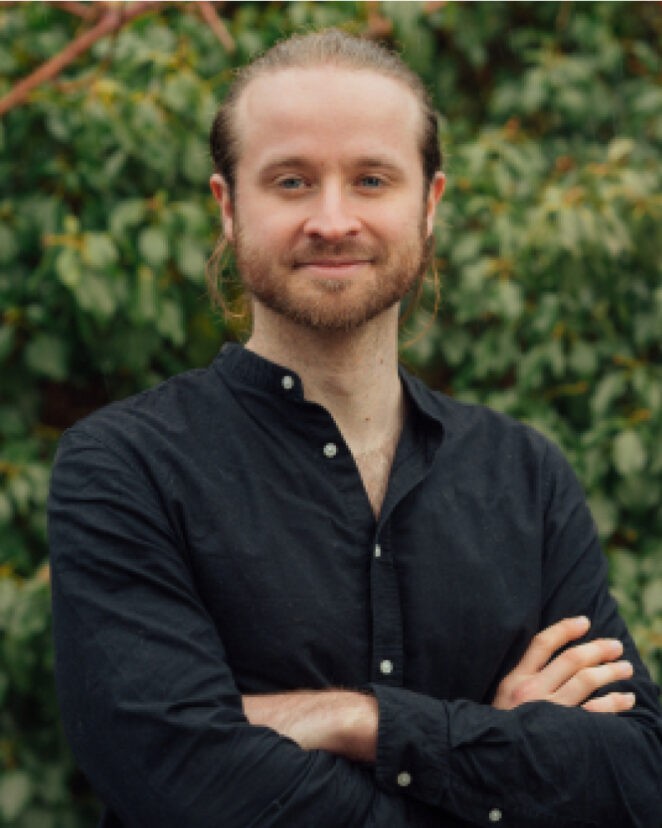
Tyler John is a philanthropic advisor and AGI preparedness researcher. In his career he’s advised the giving of TED Audacious, the John and Daria Barry Foundation, Good Ventures, the Waking Up Foundation, the Berggruen Foundation, and more than a dozen other philanthropists on AGI safety and preparedness. Today he leads artificial intelligence at the Effective Institutions Project, closely advising two families who plan to give $200m over the next decade. He was previously an executive at Longview Philanthropy, where he set up the AI team and advised on over $60m in grants related to AI safety and global catastrophic risks, and a visiting scholar at the Cambridge Leverhulme Centre for the Future of Intelligence, the Oxford University Global Priorities Institute, and the Australian National University Department of Philosophy. Tyler holds a PhD in analytic philosophy and democratic theory from Rutgers University—New Brunswick, and has published papers in law, economics, political science, health care ethics, queuing theory, and the philosophy of cognitive science in some of the top academic journals. He’s held fellowships at the National Institutes of Health, where he worked on the philosophical foundations of cost-effectiveness analysis, and the Forethought Foundation, where he studied the implications of transformative AI. Tyler has worked on writing projects with four members of the House of Lords and the Finnish Chief of Cabinet to the President, received over $150,000 in awards for his academic work, and written for the New York Times and the Washington Post. He has served on the program committees for NeurIPS and the International Association for Safe and Ethical AI. In a previous life, Tyler worked in medicinal chemistry, where he earned a patent for a candidate anti-cancer drug.
Reach Tyler at tyler@foundation-layer.ai
← Previous
Overview
Next →
Home
The Foundation Layer is a project by Tyler John, with generous support from
Effective Institutions Project and Juniper Ventures.


1
There is a further argument in favor of transformative economic growth from AI. This is that growth begets growth. The more agents we have contributing to the economy, and the more productivity that is happening, the more opportunities we have to identify new ideas and technologies that could precipitate a rate change in economic growth. An economic rate change happened twice in the last 10,000 years despite zero such rate changes in the 300,000 years the human species lived before it, due to the growing productivity of the economy. Given that today 8% of every human who has lived in the past 300,000 years is alive, and that 99% of all historical GDP has been generated in just the last 60 years, you might say that we’re due for another such rate change this century.